Faith is one of those words used so often in ordinary conversation that it can start to lose its edges. People say they have faith things will work out, faith in a friend, faith in themselves. Scripture means something more specific and, in some ways, more demanding. Biblical faith is not simply optimism or good feeling. It is trust placed in God even when the outcome is unclear, evidence is incomplete, or the road ahead looks genuinely difficult. These are Bible verses about faith, gathered by theme, with a little context for each and a few simple ways to let them shape ordinary days, not just moments of crisis.
What makes faith such a rich subject in Scripture is how differently it shows up across different lives. Abraham's faith looked like leaving behind everything familiar without knowing the destination. The woman with the issue of blood showed faith by simply reaching for the hem of a garment in a crowd. The centurion in the Gospels displayed faith through a confident trust in Christ's authority from a distance. There is no single template for what faith is supposed to look like, only a consistent thread of trust placed in God rather than in what could be seen or guaranteed.
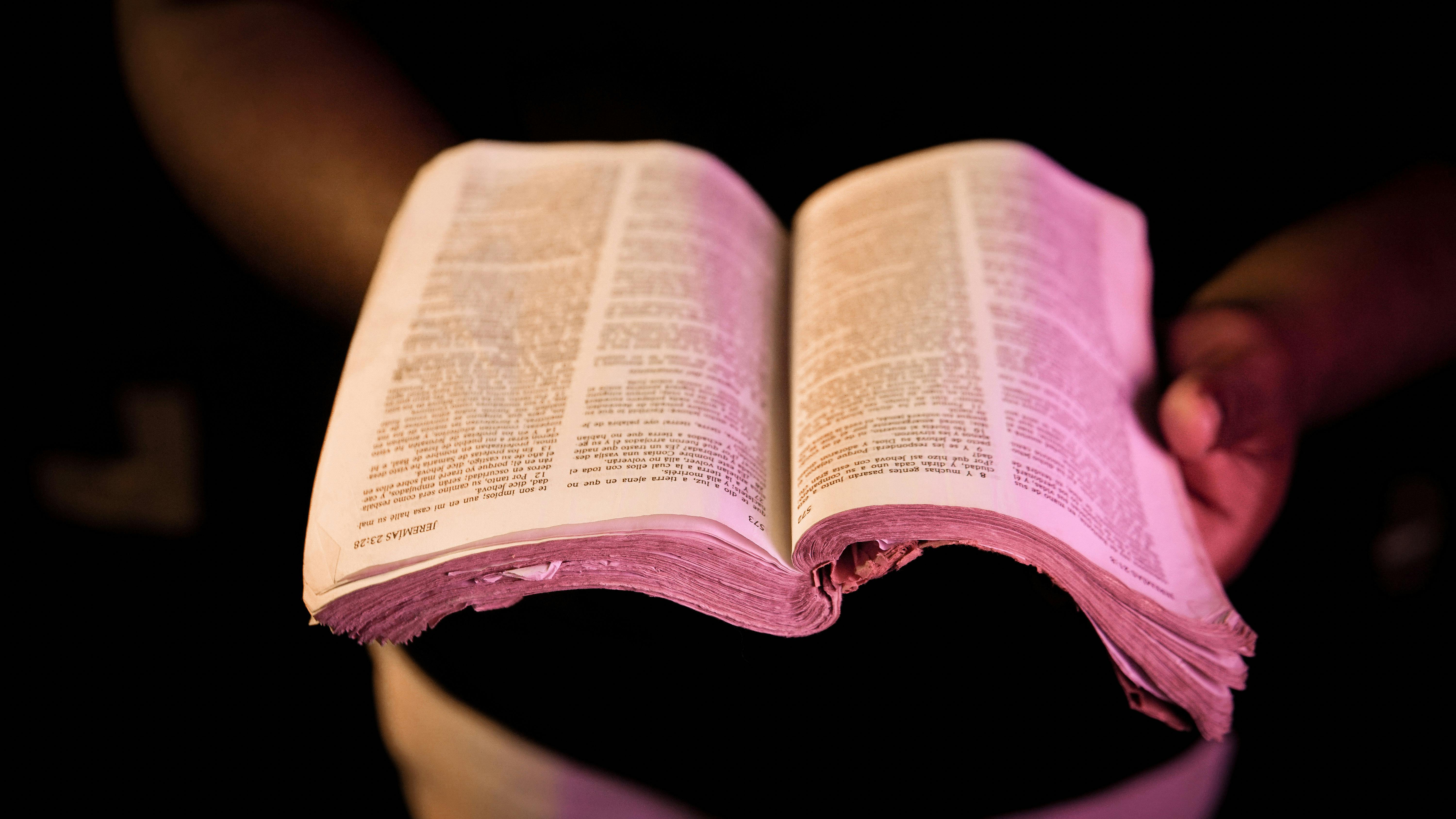
Bible Verses Defining What Faith Is
Before looking at what faith does, it helps to start with what Scripture actually says faith is:
- Hebrews 11:1: "Now faith is the substance of things hoped for, the evidence of things not seen."
- Romans 10:17: "So then faith cometh by hearing, and hearing by the word of God."
- 2 Corinthians 5:7: "For we walk by faith, not by sight."
Hebrews 11:1 is often quoted, but worth slowing down on. Faith is described as substance and evidence, not wishful thinking. That is a striking claim: that trust in what cannot be seen is not a lesser form of knowing, but its own kind of solid ground, one that has held up believers through circumstances far harder than most ordinary days ever require.
Romans 10:17 pairs naturally with Hebrews 11:1, because it points to where this kind of substantial trust actually comes from. Faith is not conjured through sheer willpower or forced positive thinking. It grows through regular exposure to God's word, which is part of why consistent Scripture reading tends to steady faith over time in a way that occasional, crisis-driven prayer alone rarely does.
2 Corinthians 5:7 completes this trio with a practical challenge. Walking by faith rather than sight means making real decisions, about relationships, about work, about how to spend time and money, based on trust in God rather than only on what can be measured or guaranteed in advance. This is rarely comfortable, but it is precisely where faith moves from an abstract belief into something that actually shapes a life.
Bible Verses About Faith the Size of a Mustard Seed
One of the most encouraging threads in Scripture is how little faith is actually required to matter:
- Matthew 17:20: "If ye have faith as a grain of mustard seed, ye shall say unto this mountain, Remove hence to yonder place; and it shall remove; and nothing shall be impossible unto you."
- Mark 9:24: "Lord, I believe; help thou mine unbelief."
- Luke 17:6: "If ye had faith as a grain of a mustard seed, ye might say unto this sycamine tree, Be thou plucked up by the root, and be thou planted in the sea; and it should obey you."
Mark 9:24 might be the most honest verse in Scripture about how faith actually feels for most people most of the time. It is not a statement of total, unwavering confidence. It is a raw, contradictory prayer: I believe, and I also do not believe enough, help me anyway. That tension is not a failure of faith. For many believers, it is simply what faith feels like on an ordinary Tuesday.
The comparison to a mustard seed is worth sitting with a little longer, too. A mustard seed is famously tiny, easy to overlook, almost nothing to hold in your hand. Christ's point is not that impressive results require impressive amounts of faith. It is closer to the opposite: even the smallest, most fragile trust, genuinely placed in God, is enough to matter. That should be freeing for anyone who feels their own faith is too small or too shaky to count for much.
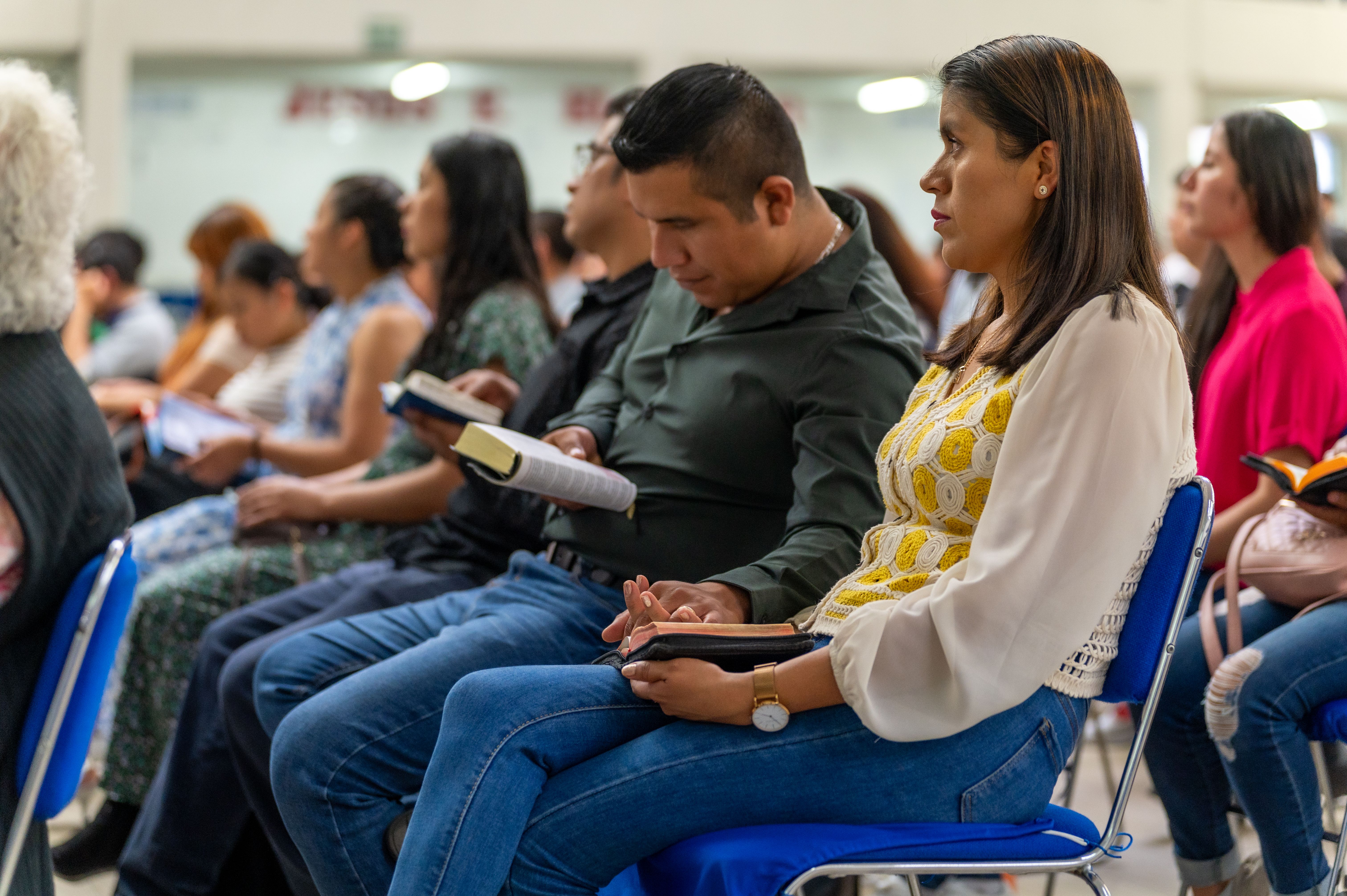
Bible Verses About Faith and Works Together
Scripture is also clear that faith is not meant to remain purely internal, disconnected from how a person actually lives:
- James 2:17: "Even so faith, if it hath not works, is dead, being alone."
- James 2:26: "For as the body without the spirit is dead, so faith without works is dead also."
- Galatians 5:6: "For in Jesus Christ neither circumcision availeth any thing, nor uncircumcision; but faith which worketh by love."
These verses are sometimes read as being in tension with passages about salvation through faith alone, but they are better understood as complementary. Genuine faith naturally shows up in action, not as a separate requirement added on top of belief, but as its natural expression. A faith that never shows up in how a person treats others is worth examining honestly, not simply defended as sufficient on its own.
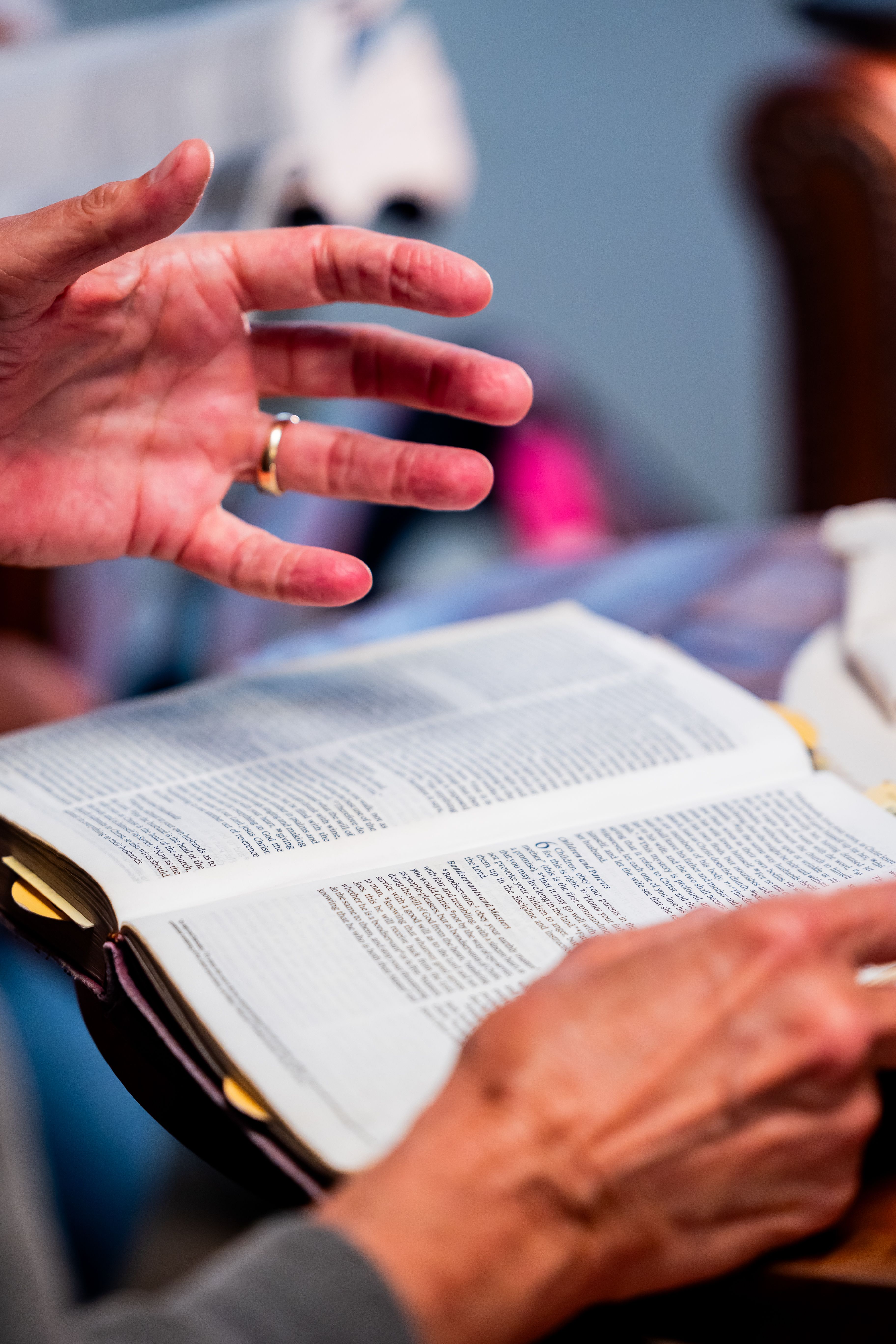
Bible Verses About Faith During Doubt
Scripture does not pretend doubt is rare or shameful. Several passages speak directly to believers wrestling with genuine uncertainty:
- Matthew 14:31: "And immediately Jesus stretched forth his hand, and caught him, and said unto him, O thou of little faith, wherefore didst thou doubt?"
- James 1:6: "But let him ask in faith, nothing wavering. For he that wavereth is like a wave of the sea driven with the wind and tossed."
- John 20:29: "Jesus saith unto him, Thomas, because thou hast seen me, thou hast believed: blessed are they that have not seen, and yet have believed."
John 20:29 is worth returning to whenever doubt feels disqualifying. Thomas is remembered for his doubt, but Christ's response is not harsh rejection. It is a gentle redirection toward a different, arguably deeper kind of faith, one that does not require physical proof to remain genuine. Most believers today are, in that sense, closer to Thomas after his doubt was addressed than to the disciples who saw the resurrected Christ directly.
It is worth noting, too, that Christ does not scold Thomas for asking to see the wounds. He simply meets the request, and then gently points toward something further. This pattern shows up elsewhere in Scripture as well: honest questions are rarely condemned outright. What Scripture consistently discourages is not questioning itself, but settling permanently into questioning as a substitute for ever choosing to trust at all.
Bible Verses About Faith in Difficult Circumstances
Some of Scripture's strongest statements on faith come from people facing genuinely hard, uncertain situations:
- Habakkuk 3:17-18: "Although the fig tree shall not blossom... yet I will rejoice in the LORD, I will joy in the God of my salvation."
- Job 13:15: "Though he slay me, yet will I trust in him."
- Romans 8:24-25: "For we are saved by hope: but hope that is seen is not hope... but if we hope for that we see not, then do we with patience wait for it."
Habakkuk's declaration is especially striking because it comes before any resolution to his circumstances. He does not wait for the fig tree to blossom before choosing to trust God. That order matters. Biblical faith is rarely a response to circumstances already improving. It is, more often, a choice made in the middle of circumstances that have not yet changed at all.
Job's statement carries a similar weight. It is not spoken from a place of comfort or clarity about why suffering has come. It is spoken in the middle of loss that Job himself never fully understands, even by the book's closing chapters. That such a raw, unresolved declaration of trust made it into Scripture at all is itself instructive: faith does not require full understanding of your circumstances before it can be genuinely expressed.
How to Let These Verses Shape Daily Life
Reading verses about faith is one thing. Letting them actually strengthen your own trust in God is another. A few practices that help these words move from page to practice:
- Choose one verse to carry through a hard week, returning to it specifically when doubt or worry resurfaces, rather than reading it once and moving on.
- Say Mark 9:24 honestly when your own faith feels mixed or incomplete, rather than waiting until you feel more certain to pray at all.
- Look for one small action that reflects a verse's meaning, connecting James's teaching on faith and works to something concrete in your actual week.
- Write a verse where you will see it daily, a mirror, a car dashboard, a phone lock screen, so it becomes a repeated reminder rather than something read once and forgotten.
Keeping a small holy card with a favorite faith verse in a wallet or bag, or wearing a Scripture bracelet engraved with one of these passages, gives many people a physical, repeated touchpoint that keeps a specific verse present throughout an ordinary day, not just during morning devotions.
A wooden bead rosary can serve a similar purpose for those who pray it regularly. Each decade becomes a natural pause to bring a specific worry or uncertainty to God, practicing exactly the kind of repeated, deliberate trust these verses describe, rather than treating faith as something reserved only for especially difficult moments.

A Few Common Questions
Is it normal to have strong faith some days and weak faith on others? Yes, and Scripture reflects this reality throughout, from Peter's faith wavering on the water to the honest prayer in Mark 9:24. Faith is rarely a fixed, unchanging state. It fluctuates, and returning to it after a weak season is itself an act of faith.
How is faith different from simply being a positive or hopeful person? Faith is specifically trust placed in God, not general optimism about outcomes. A person can have strong faith while also feeling genuinely uncertain about how a specific situation will resolve, because the trust is placed in God's presence and character, not in a guaranteed particular outcome.
What if I want to have more faith but do not know where to start? Romans 10:17 offers a direct answer: faith grows through exposure to God's word. Regular Scripture reading, even a few verses a day, tends to build faith gradually, more like a muscle strengthened through consistent use than a switch flipped instantly.

A Final Reflection on Faith
Scripture never asks for a faith free of all doubt or uncertainty before it counts as real. What it asks for, again and again, is a willingness to keep trusting, even in a mustard seed's amount, even while praying "help thou mine unbelief" in the same breath as "Lord, I believe." That kind of imperfect, persistent trust is available to anyone willing to keep returning to it, one verse, one uncertain day, one small act of trust at a time.
If these verses spoke to something you are working through in your own faith right now, consider keeping one close at hand, written on a card, worn on a bracelet, or kept as a bookmark in your Bible, as a quiet, repeated reminder that faith was never meant to be built in a single dramatic moment. It is built the same way most lasting things are, slowly, imperfectly, and one honest step of trust at a time.
Years from now, the specific circumstances that first sent you looking for verses about faith may be long resolved, forgotten, or replaced by an entirely new set of uncertainties. What tends to remain is the habit built in the meantime, a steadier instinct to bring doubt honestly to God rather than pushing it aside, and a growing willingness to trust even when the outcome is still completely unknown. That habit, more than any single verse memorized, is what Scripture seems most interested in cultivating.