A religious figure, a statue of the Blessed Mother, a guardian angel, a small crucifix, or a favorite saint, is rarely just decoration in a Catholic home. It is meant to be seen, to quietly interrupt an ordinary day with a small visual reminder of faith. But where exactly a figure goes in a home actually matters more than many people realize. A statue tucked away in a rarely used room does very little of that quiet, repeated work. Here is a room by room guide to displaying religious figures thoughtfully throughout your home, along with a few principles to guide the choice wherever you decide to place them.
Many families accumulate religious figures gradually over the years, a gift from a grandmother, a souvenir from a pilgrimage, a keepsake from a child's First Communion or Confirmation, without ever stepping back to consider whether each piece is placed somewhere it can actually do its quiet work. Taking stock of what a home already has, and asking honestly whether each piece is seen regularly or has simply been forgotten in a closet or drawer, is often a useful first step before adding anything new to an already growing collection.
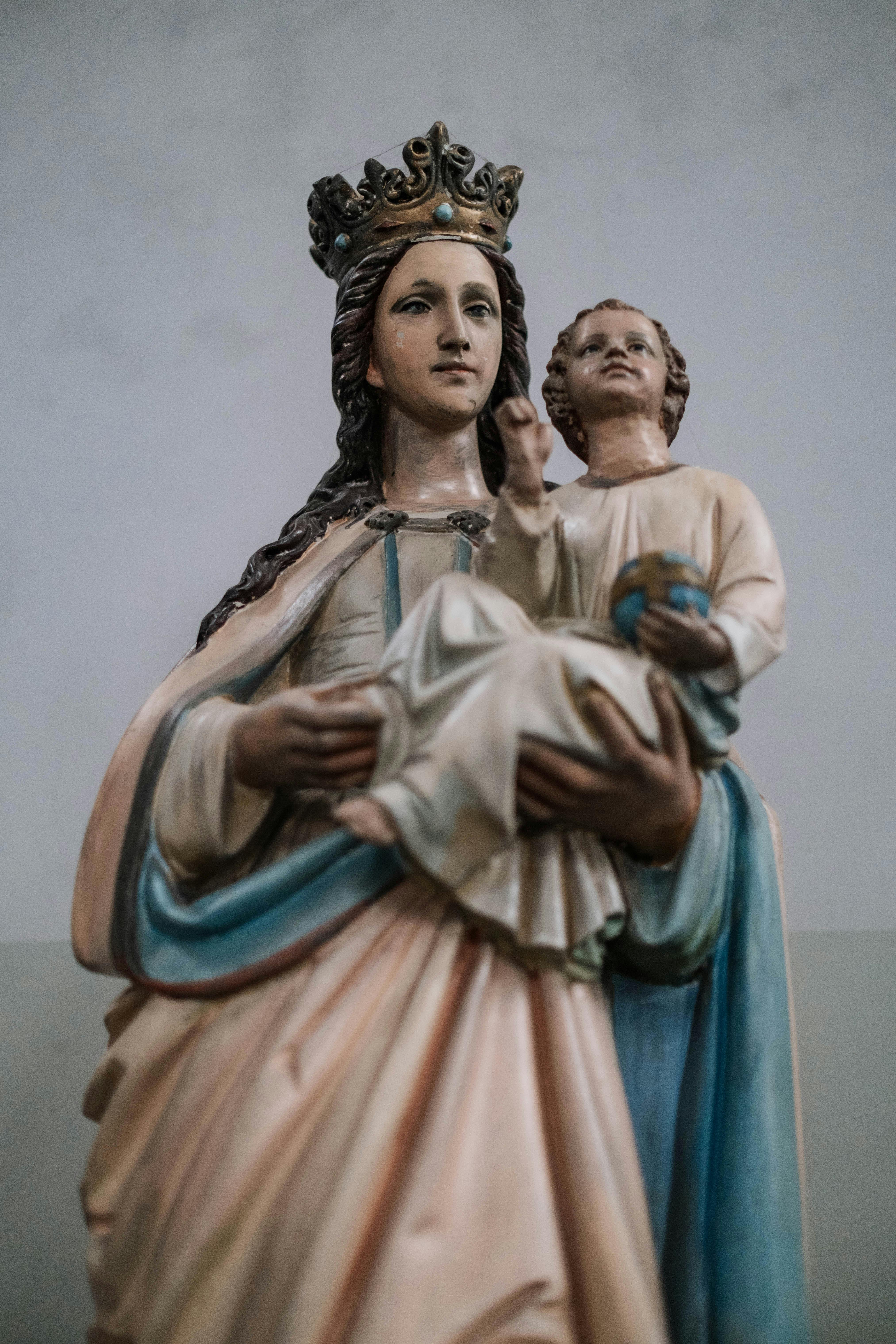
Why Placement Actually Matters
A religious figure works best when it intersects with the actual rhythm of daily life, not when it is hidden away in a formal space rarely used. A statue in a guest room that goes unvisited for weeks at a time offers almost none of the quiet spiritual benefit a family might hope for. The same statue placed somewhere a family passes multiple times a day, a hallway, a kitchen counter, a bedside table, becomes a genuine, repeated touchpoint rather than a forgotten decoration.
This does not mean every figure needs to be prominently displayed in a busy, high traffic area. Some pieces are suited to quiet, private spaces specifically because their purpose is personal reflection rather than shared family visibility. The key question worth asking before placing any figure is simple: who is meant to encounter this, and how often, and does its current location actually support that intention.
It also helps to think about a figure's specific purpose before deciding where it belongs. A guardian angel watching over a child's sleep belongs in that child's bedroom. A Sacred Heart image meant to anchor a family's shared prayer life belongs somewhere the whole family gathers. Matching a figure's purpose to its placement, rather than defaulting to wherever there happens to be open shelf space, tends to produce a home that feels genuinely intentional about its faith rather than randomly decorated with religious items.
It is worth remembering, too, that placement can change as a family's needs change. A figure that made sense in a nursery may need to move once a child grows into a bigger bedroom of their own. A statue that once anchored a family's evening prayer routine might need relocating once that routine shifts to a different room. Revisiting placement occasionally, rather than assuming a figure's spot is fixed forever, keeps a home's religious display responsive to how the family actually lives, rather than frozen at whatever arrangement felt right years earlier.
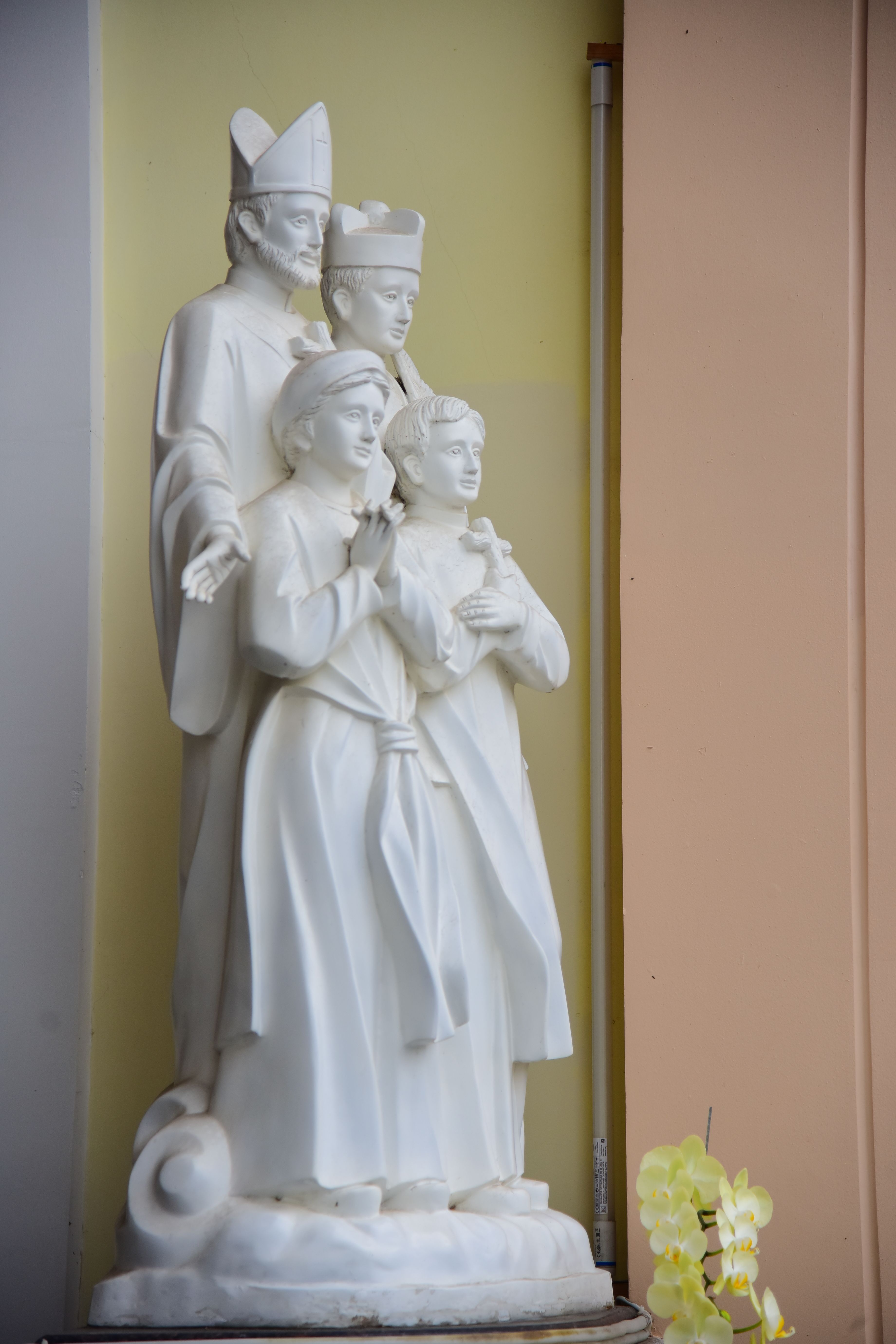
The Entryway: A Blessing on the Way In and Out
Many Catholic homes place a small holy water font or a figure of a guardian angel near the front door, a tradition rooted in blessing oneself, and the home, every time someone enters or leaves. This placement works well for a small statue or a wall-mounted piece rather than anything large, since entryways tend to be compact, transitional spaces.
A small figure here serves a specific, repeated purpose: marking every departure and return with a brief, almost unconscious acknowledgment of faith, whether that is a quick sign of the cross with holy water or simply a glance at a familiar, comforting image on the way out the door each morning.
Some families also use this spot to keep a small basket of holy cards or a rosary hanging on a hook, giving anyone leaving the house a quick, tangible option to grab if they want to carry a prayer with them for the day. This small addition turns a purely visual reminder into something genuinely functional for a busy household on the move, rather than something admired only in passing.
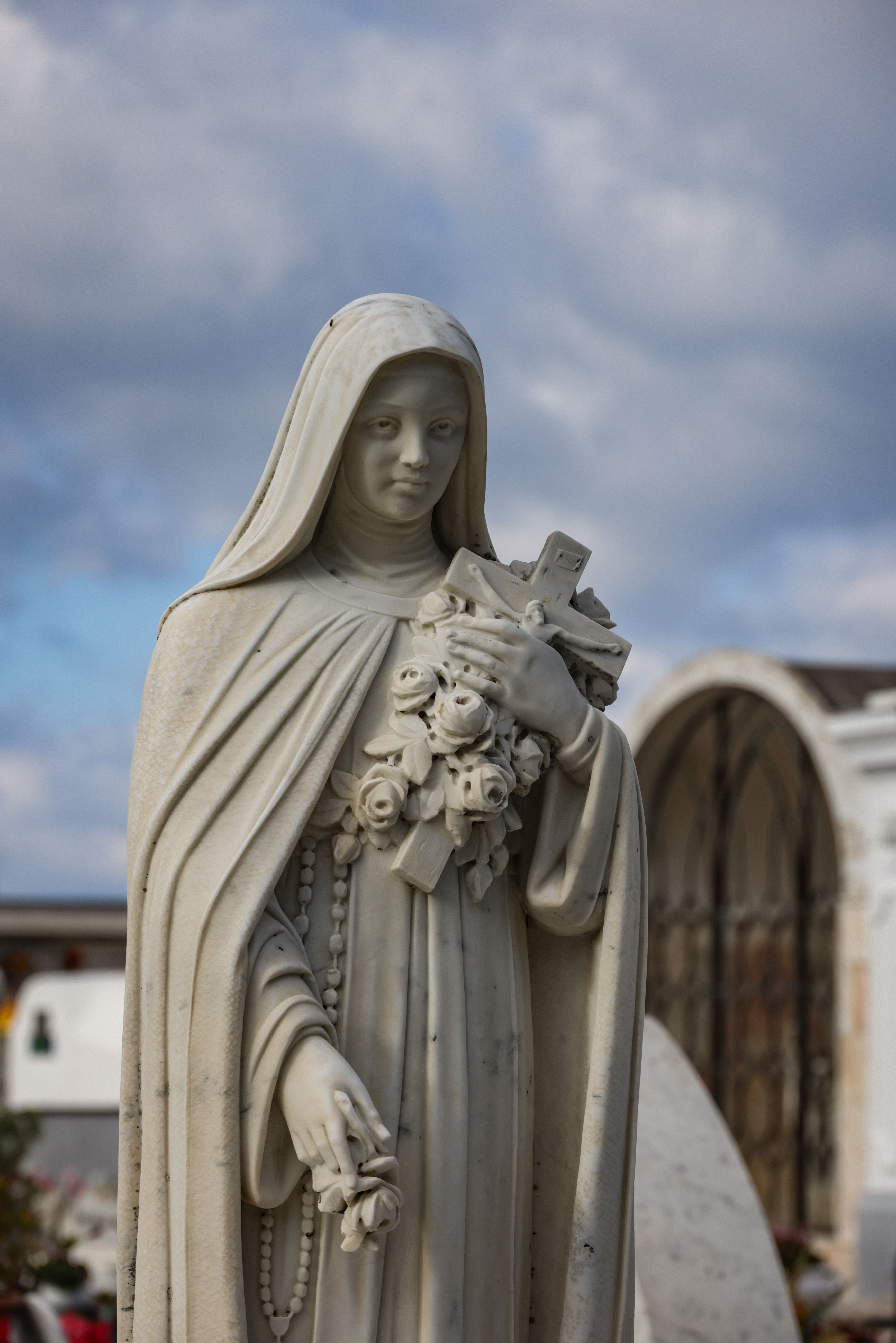
The Kitchen or Dining Area: Faith Around the Family Table
The kitchen and dining area are often the most heavily trafficked spaces in a home, making them ideal for a figure meant to be seen by the whole family regularly. A small statue on a windowsill, a Sacred Heart image on a nearby wall, or a simple crucifix above the table all work well here.
Placing a figure specifically where the family eats together also ties naturally into the practice of saying grace before meals, giving the visual reminder and the spoken prayer a shared physical location that reinforces both. Over time, children especially tend to associate this specific spot with the family's mealtime prayer habit, even without being explicitly told to make that connection, sometimes glancing toward it instinctively the moment everyone sits down to eat.
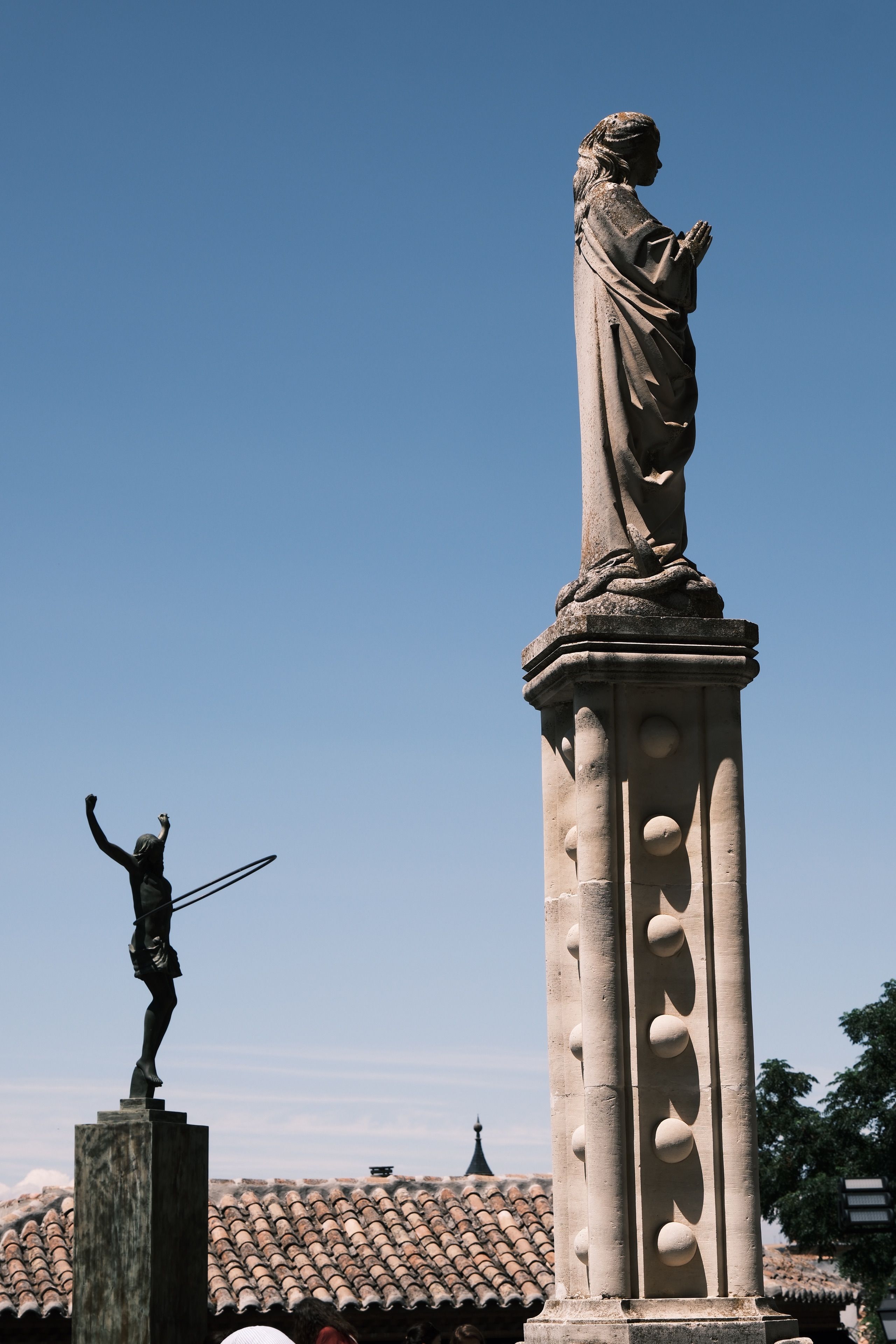
The Living Room: A Shared Family Focal Point
A living room often serves as the most natural place for a larger or more prominent figure, a statue of the Blessed Mother, a family crucifix, or a devotional image meant to represent the household's shared faith identity to anyone who visits. This is also a fitting location for a small family altar or prayer corner, if space allows, gathering a statue, a candle, and perhaps a Bible together in one dedicated area.
A living room prayer corner works especially well for families who pray together regularly, the Rosary, evening prayers, or a simple nightly blessing, giving the practice a consistent physical home rather than being said wherever happens to be convenient on a given night.
Even a small side table dedicated to this purpose, cleared of unrelated clutter and holding only a statue, a candle, and perhaps a small dish for rosaries, can anchor a family's shared prayer routine surprisingly well. The physical consistency of returning to the same specific spot each evening tends to reinforce the habit far more than praying in a different location every night depending on where the family happens to be sitting.
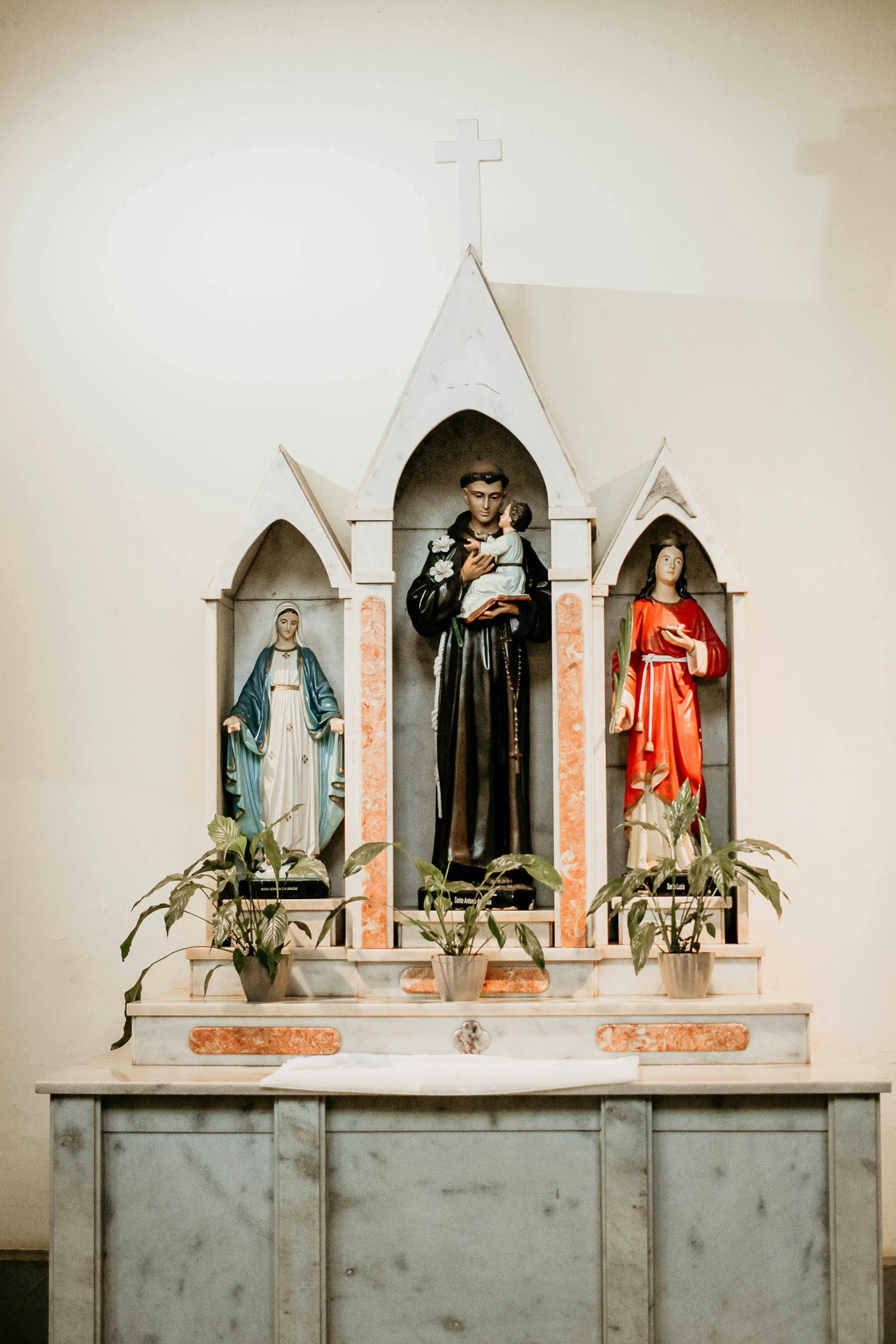
Children's Bedrooms: A Personal Guardian
A child's bedroom is often the most meaningful place for a small guardian angel figure, a statue of their patron saint, or a gentle image of Christ as the Good Shepherd. Placed on a nightstand or a shelf within easy view from bed, this kind of figure becomes part of a child's nightly routine, glanced at before sleep and again first thing in the morning.
For younger children especially, a guardian angel figure can offer real comfort during a season of nighttime fears, giving them a tangible, familiar object to associate with the idea that they are watched over and never truly alone, even in the dark, especially on nights when sleep does not come easily. Older children might prefer a figure or medal of a saint connected to their own name or confirmation choice, something that feels more personally theirs as their faith continues to mature. As children grow, involving them in choosing or arranging their own bedroom figure, rather than only inheriting whatever a parent placed there in infancy, helps the display continue to feel personally meaningful rather than outgrown alongside the rest of a childhood bedroom.
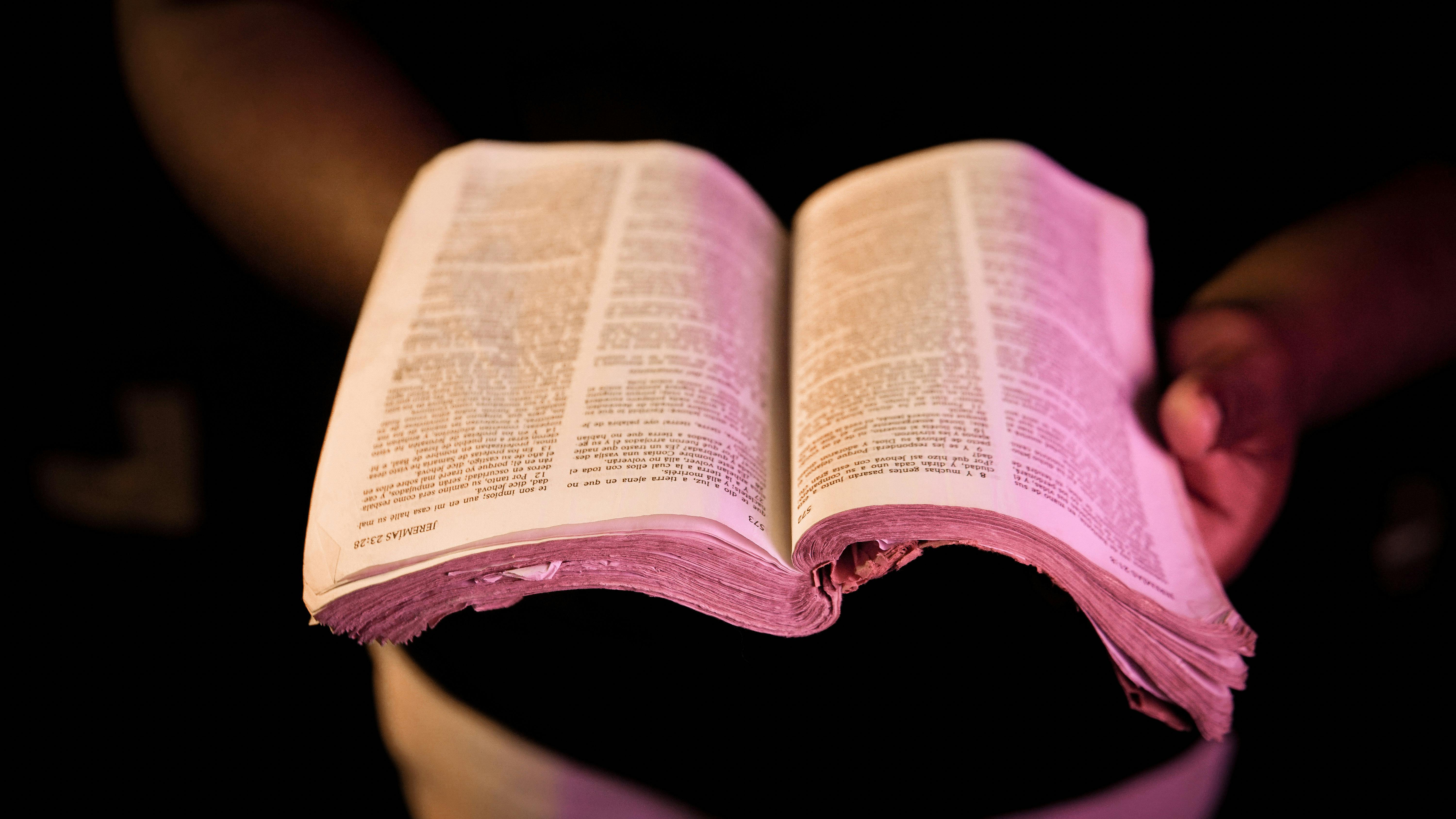
The Home Office or Study: A Quiet Companion for Focused Work
A small figure or holy card in a home office or study space, wherever bills are paid, homework is completed, or work happens, offers a quiet reminder to bring even ordinary, practical tasks before God. A small statue of Saint Joseph, patron of workers, or a simple cross on a desk, tends to fit naturally here without becoming distracting.
This placement works especially well for anyone who experiences work-related stress or decision fatigue, offering a brief, glanceable reminder to pause and pray rather than pushing through difficult tasks purely on willpower alone. For students doing homework at the same desk, this same figure can serve a nearly identical purpose, a quiet companion during a frustrating assignment or a stressful stretch of exam preparation.
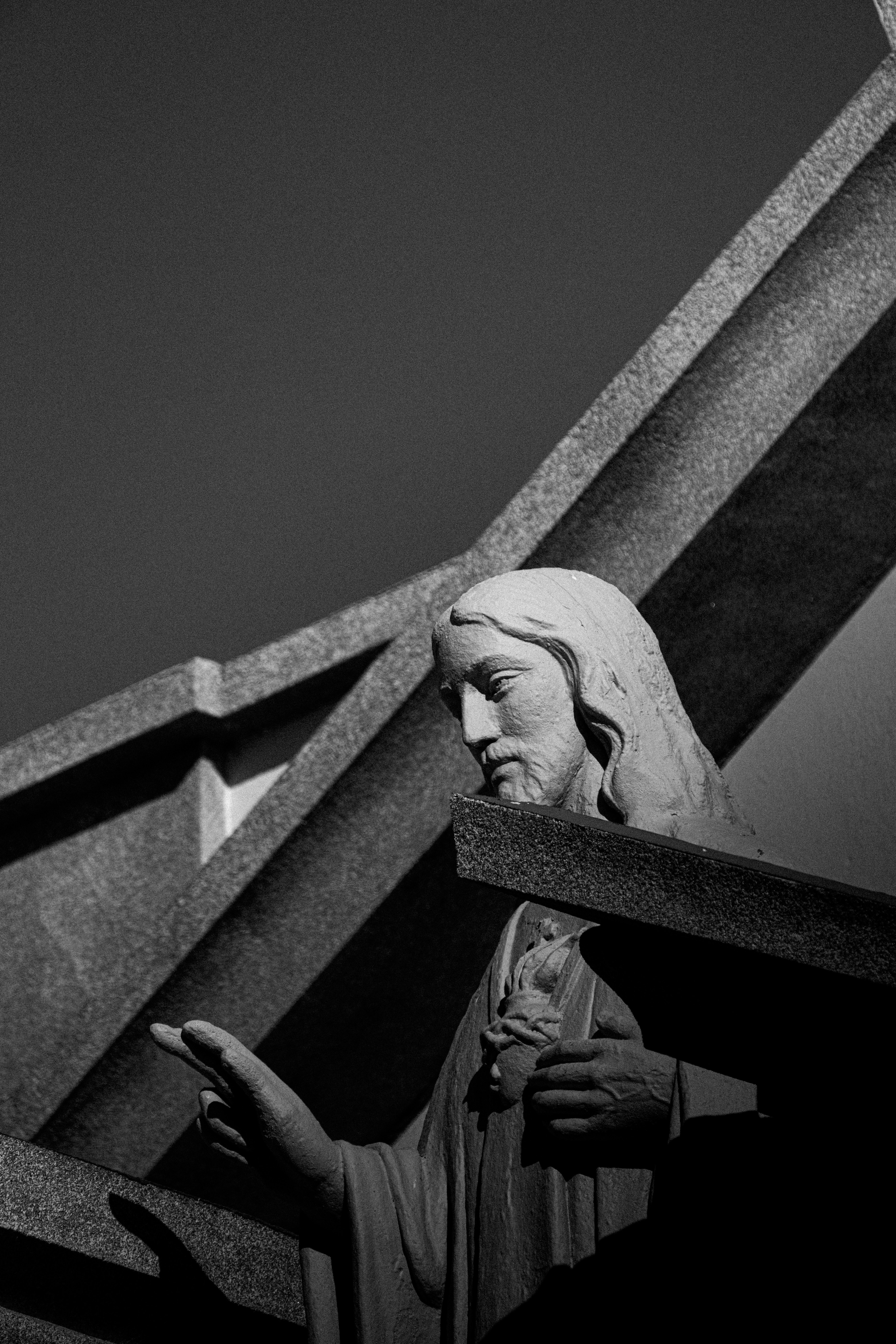
Choosing the Right Figure for Each Space
A few practical considerations when matching a specific figure to a specific room:
- Scale matters, a large statue can overwhelm a small nightstand, while a tiny figure can feel lost on a large mantel or shelf.
- Match the figure's tone to the room's purpose, a gentle, comforting image for a child's bedroom, a more dignified, formal piece for a shared living space.
- Consider durability in high traffic areas, choosing sturdier materials for spaces where the figure might be bumped or handled by young children.
- Rotate seasonal pieces, bringing out a Nativity figure at Christmas or a specific saint's image on their feast day, keeping the practice feeling fresh rather than static year round.
- Involve children in the choice when possible, letting them help select or arrange a figure for their own room, which tends to deepen their personal connection to it over time.
A well-chosen wood bead rosary draped near a figure, or a small holy card tucked beside it, can also add a layer of everyday usability to a display that might otherwise feel purely decorative, turning a static figure into an actual invitation to pray, rather than simply an object to look at from a distance.
A Few Common Questions
Is it appropriate to have religious figures in every room of the house? There is no requirement either way. Some families prefer a few carefully chosen, prominent pieces, while others enjoy a smaller figure in nearly every room. What matters more than quantity is that each piece is placed with genuine intention rather than simply filling empty shelf space out of habit or convenience.
What if my children are young and might damage a fragile figure? Choose sturdier materials for lower, more accessible shelves in high traffic family areas, and reserve more delicate or valuable pieces for higher shelves or less accessible spaces until children are a bit older and better able to handle them carefully.
Should figures be dusted or cared for in any particular way? Treating a religious figure with the same basic care as any cherished household item, regular dusting, gentle cleaning, careful placement away from direct heat or moisture, is generally sufficient and reflects respect for what the piece represents.
Is it acceptable to display figures alongside ordinary home decor? Yes, most families integrate religious figures naturally alongside family photos, books, and other decorative items rather than isolating them in a separate, purely devotional space. This integration often reinforces the idea that faith belongs woven throughout ordinary life, not set apart from it as something separate and occasional.
A Home Shaped Quietly by What It Displays
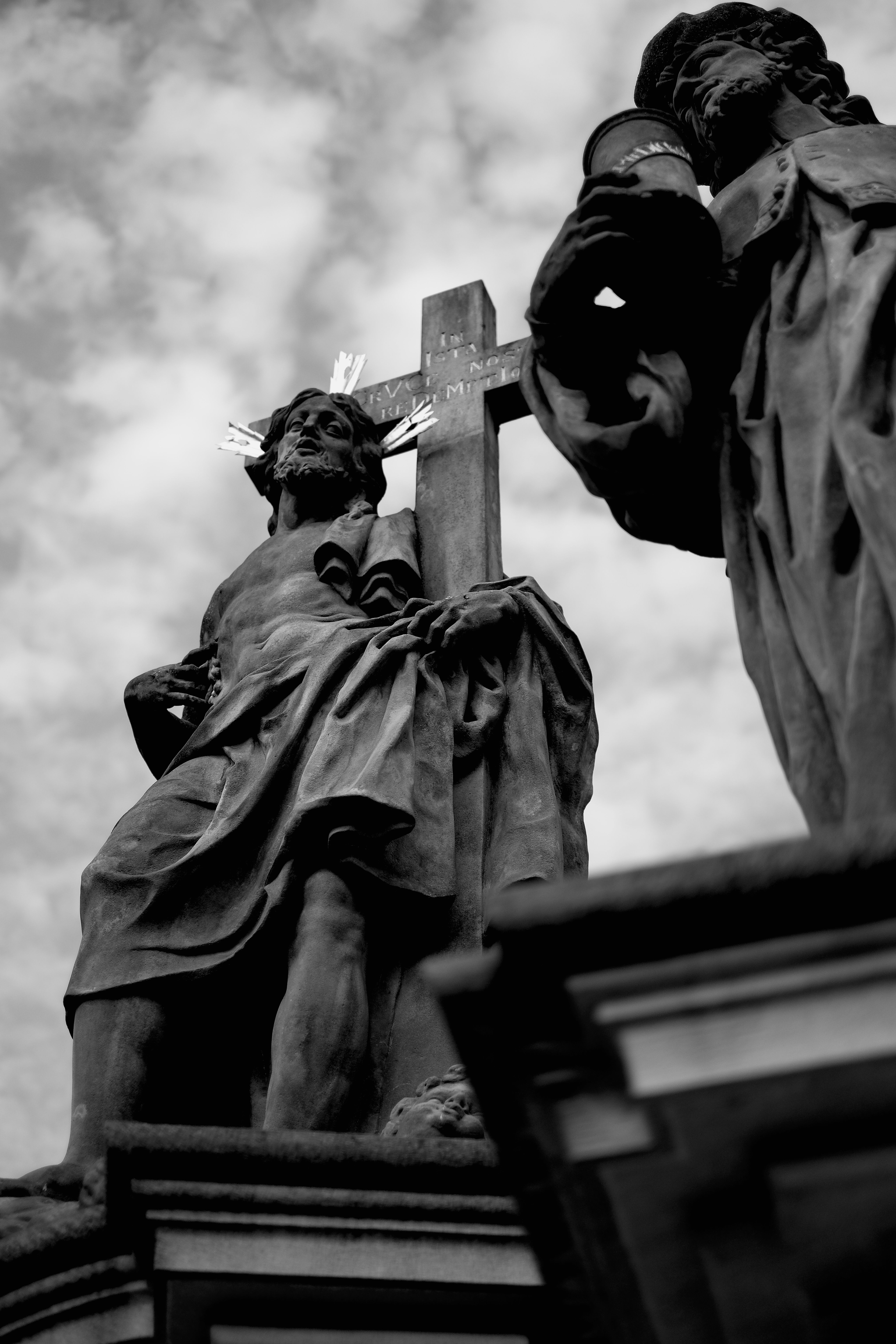
Where a family chooses to place its religious figures says something real about how faith is meant to be lived day to day, whether it is tucked away for special occasions or woven visibly into the ordinary rhythm of the home. A thoughtfully placed statue by a child's bed, a small figure on the kitchen windowsill, a family crucifix in the living room, each one becomes part of the quiet architecture of a household's faith, seen and passed by dozens of times a week without ever needing to be announced or explained to whoever happens to notice it.
Wherever you decide to place your own figures, the most important principle remains simple: choose spots where they will actually be seen, touched, and remembered, not just displayed. A home does not need dozens of religious items to feel genuinely shaped by faith. It needs a handful placed with real intention, in exactly the spots where a family's ordinary life actually happens, day after day, in all the small unremarkable moments that add up to a life of faith over time.